How to Give a Robot Feelings Without Giving It a Face
Faces are efficient. Too efficient.
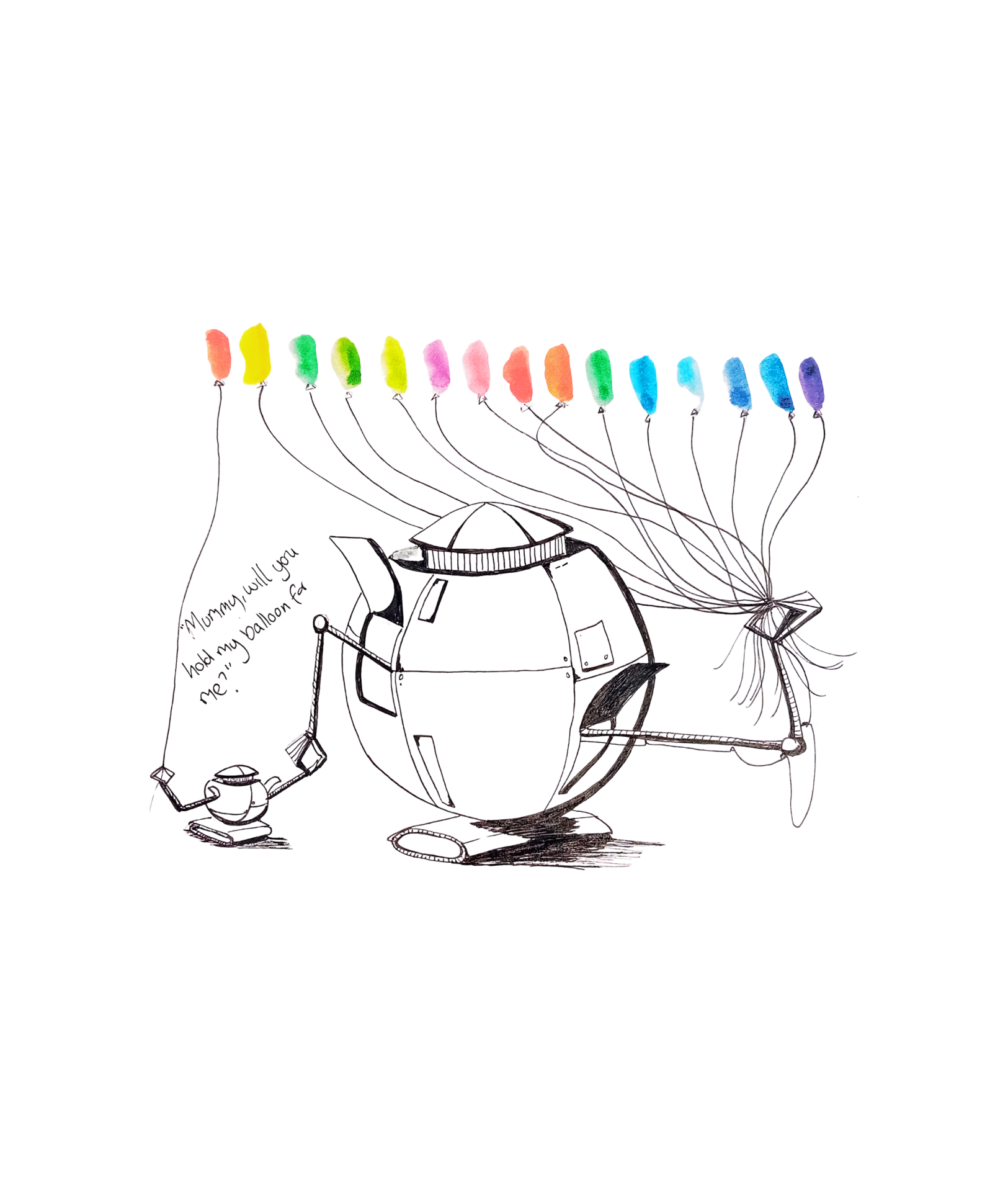
The moment a robot has eyes or an expression, the feelings become obvious and slightly demanding. You are told what to feel and when. To give a robot feelings without giving it a face, you have to let the emotion leak out somewhere else.
Posture helps again.
So does spacing.
A robot standing too close feels different from one standing just a little too far away. Orientation matters. A robot turned slightly away can suggest hesitation, disinterest, or restraint without committing to any one emotion. Stillness can feel heavy or calm depending on context. None of this needs explanation. The feeling arrives quietly, often after you have stopped looking for it.
If the robot feels present without being expressive, the balance is right. The above robot is in a state of confusion and awe at its small robots question (if you’re a parent you know full well the situation where you are carrying all the bags and then your child asks you to carry its stick as well).
If you are curious about robots that manage to feel something without showing it, you can find more of them elsewhere on this site. Most of my robots are ridiculously awkward, confused or busy. More of a reflection of me than I first realised.